Land of Headhunters
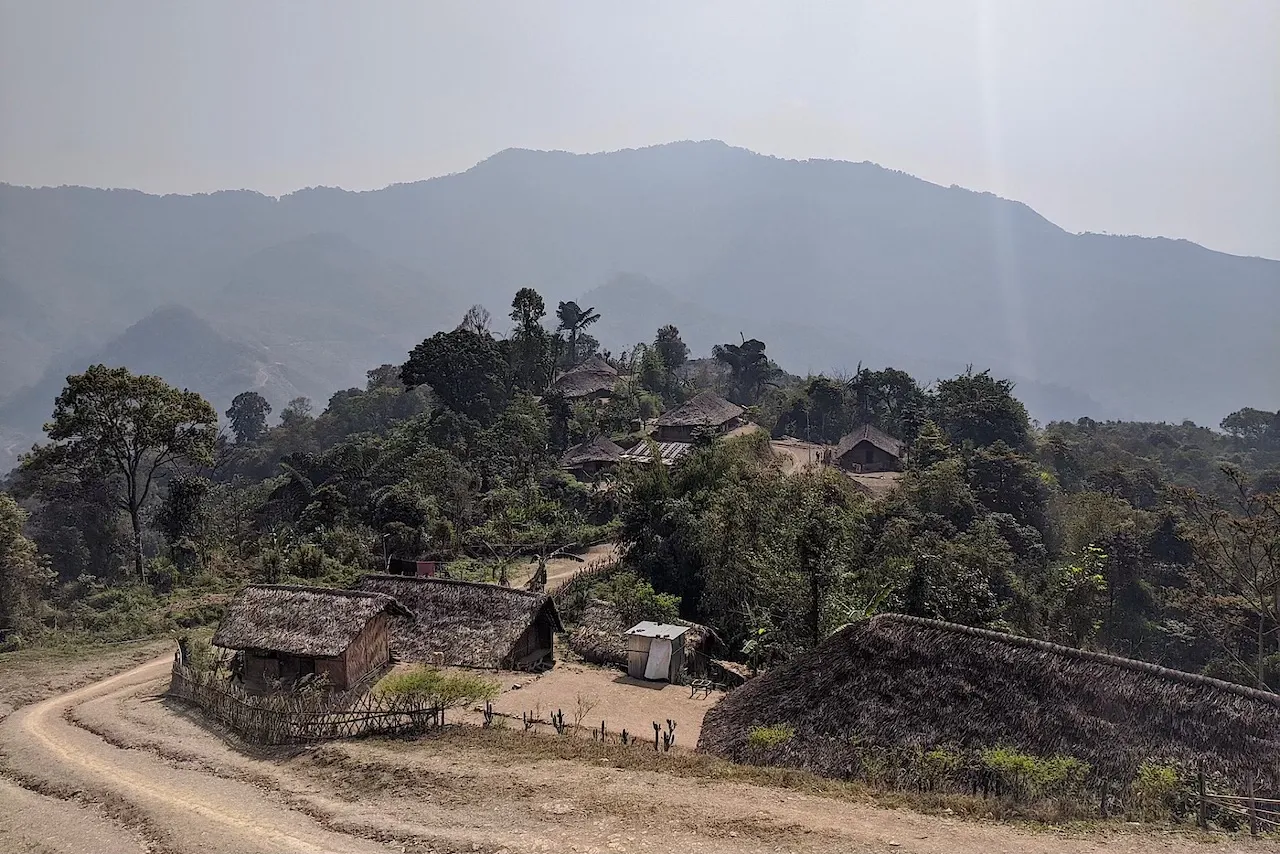 Longwa Village, in the Naga Autonomous Region of Burma, on the Indo-Burmese border
After a tough day cycling the relentlessly steep hills to Mon town, the next stop was Longwa, a village on the Burmese border. I had planned to cycle but as it was a detour, I decided to leave my bike behind and take a sumo (shared jeep). I was glad I did, as the sumo often needed full throttle on the steep roads and the journey took more than two hours to travel just forty kilometres.
Longwa is in the middle of nowhere, and it felt almost as remote as parts of the Congo. The village sits on a high ridge, straddling the border of India and Burma, yet the people on both side are Nagas. The village hadn't seen tourists for over a year, and the formal lodgings were closed, so I sought shelter at the nearby Baptist church, where I found myself with the welcoming Pasteur Yona. His church sat right on the dividing line, and according to my map, my bed for the night was on the Burmese side.
That evening, I went to the Pasteur's sermon, which was well attended, with maybe a hundred people. The service was given in Konyak, the local language, so I didn't understand much, though I managed to follow the roman-script hymn sheet. During the service two women started having convulsions, like epileptic seizures and had to be carried out. "Evil spirits" said the guy next to me.
The next day, the Pasteur showed me around the village. We went to the longhouse of the king and queen of Longwa and had tea and biscuits (every village has royalty). Then back at the church house we ate breakfast, with Burmese tea, and squirrel, that the Pasteur had shot in the forest – and it did not taste like chicken.
I wanted to wander around the Burmese part of Longwa, so I walked to the border road but the Indian army wouldn't let me through. Well, there's more than one way to skin a cat I thought – especially at this porous border! So instead, finding a walking track, I easily found myself down on the Burmese side.
The locals seemed even more surprised to see me than on the Indian side, and unless I said something or waved, the children all ran away as fast as they could. I saw a few old men with tattoos on their face, meaning they were headhunters or part of the clan, back in those animist days.
While the Indian side had a number of amenities, the Burmese side (see very top image) had no electricity, no cell towers, and not a concrete building in sight, even corrugated sheeting was rare. Tumultuous political events were taking place in Burma, yet this village was so remote, I suspect they hadn't even heard the news. The Burmese side is actually part of a Naga SAZ (self-administered zone), it's capital, and Longwa's nearest town was Lahe, which the Pasteur said was a very long, and arduous journey.
- ← Previous
Divide and Rule - Next →
Ging Gang Goolie